
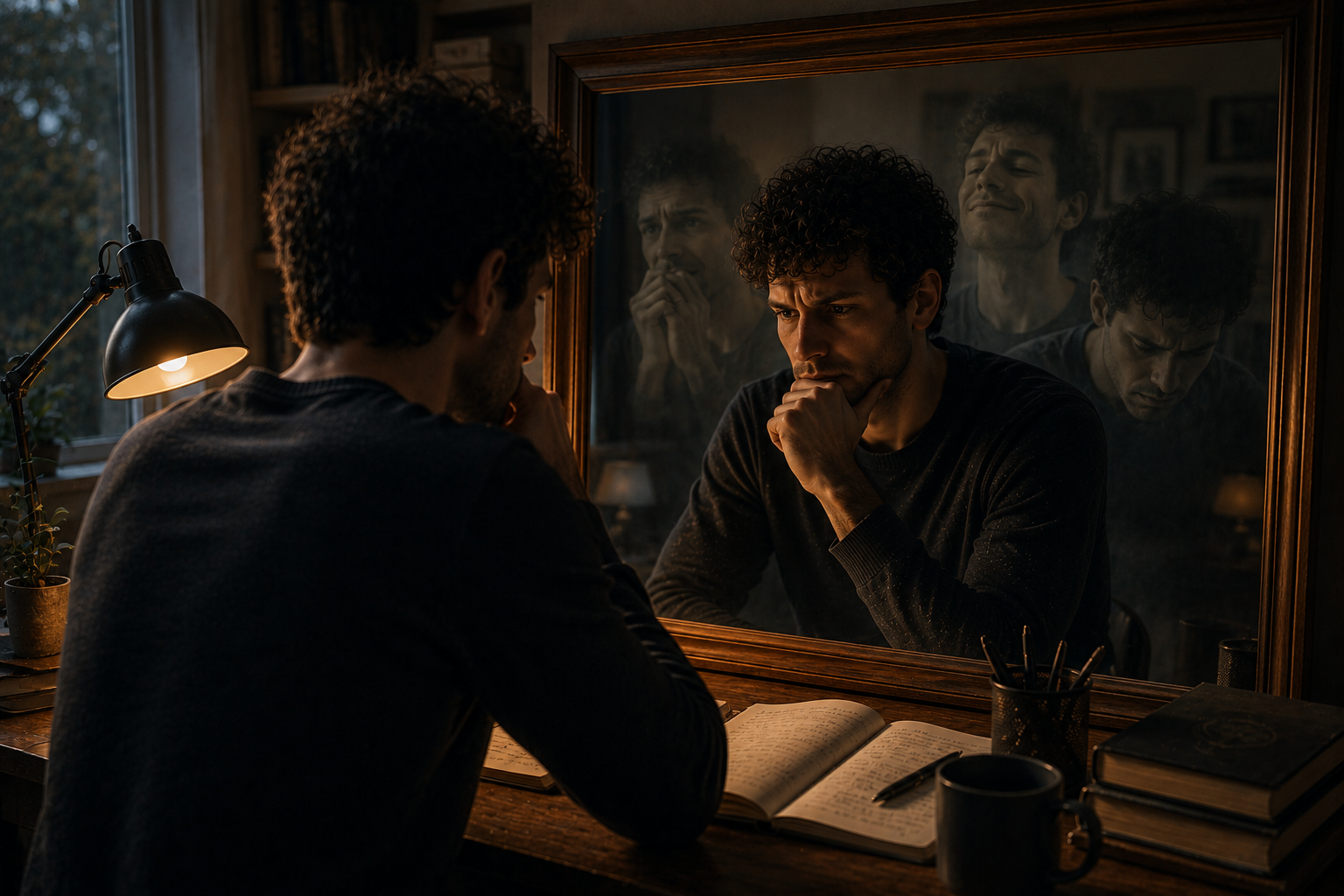
Anyone who engages in inner observation practice brings with them a pre-existing self-image: a representation of who they are, how they function, what they habitually feel. This image is not neutral. It constitutes an active filter that precedes and orients every observation.
The self-image functions as a constant background noise. It is so familiar that one no longer distinguishes it from perceptions themselves. Observing from “I am an anxious person” modifies the perception of states of anxiety: one confirms them, amplifies them, or conversely minimises them depending on the coherence needs of the image.
Documented interference mechanisms
- Confirmation: states congruent with the image are amplified, incongruent ones minimised.
- Preventive avoidance: certain observations are avoided because they would threaten the coherence of the self-image.
- Projection: inner states are attributed to the external context to protect the self-image.
These mechanisms are not deliberate. They operate automatically, which makes them particularly difficult to detect without specific practice.
An effective entry point for working with the self-image: note the moments of incongruence. When an observation does not correspond to what one “knows” oneself to be. These moments of surprise at oneself are precious windows: they signal an observation that escaped the filter.