
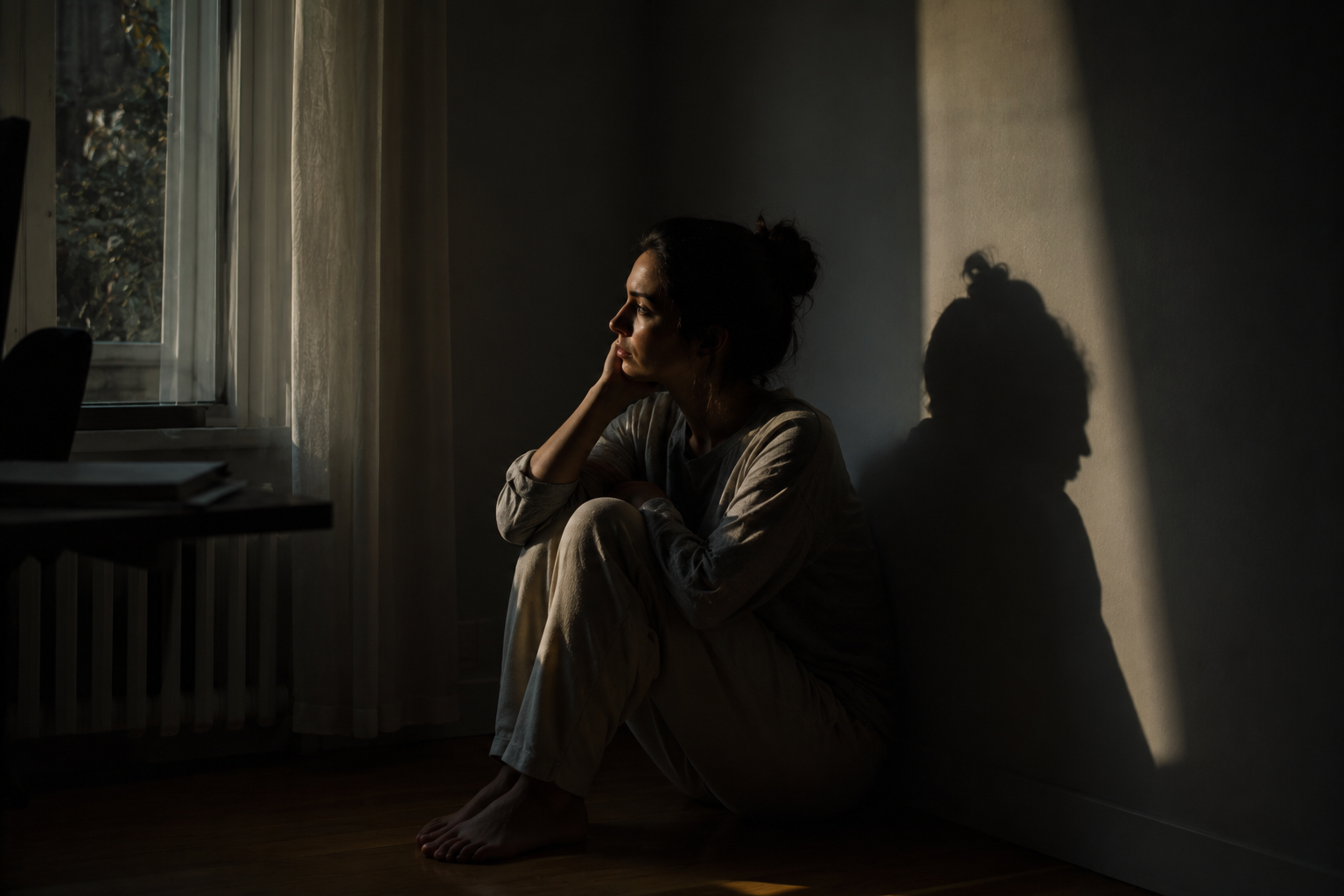
One of the most persistent findings in working with inner observation practitioners is this contradiction: those who express a desire to know themselves simultaneously manifest an active resistance to observation. This is not incoherence. It is a structure.
Resistance to observation takes several forms that, at first glance, resemble something else. Procrastination of the practice moment. The systematic introduction of an urgent task at the scheduled time. The observation that begins and immediately becomes lost in a narrative. Falling asleep as soon as vigilance turns inward. These phenomena are too regular to be accidental.
What resistance protects
The hypothesis most consistent with the Laboratory’s observations: resistance protects a coherence. The self-image (constructed, stabilised, socially validated) is potentially fragile under too direct an observation. Not because observation necessarily reveals negative things, but because it reveals things different from what the self-image supposes.
This explains a frequent paradox: advanced practitioners sometimes encounter more resistance than beginners. They have more to lose in terms of constructed coherence.
Working with resistance
The Laboratory’s approach is not to circumvent resistance or to overcome it by effort. It is to make it an object of observation. Resistance itself is an inner state with its own characteristics: its texture, its triggers, its fluctuations. Observing the resistance to observing is, in practice, one of the most fruitful entry points into inner work.